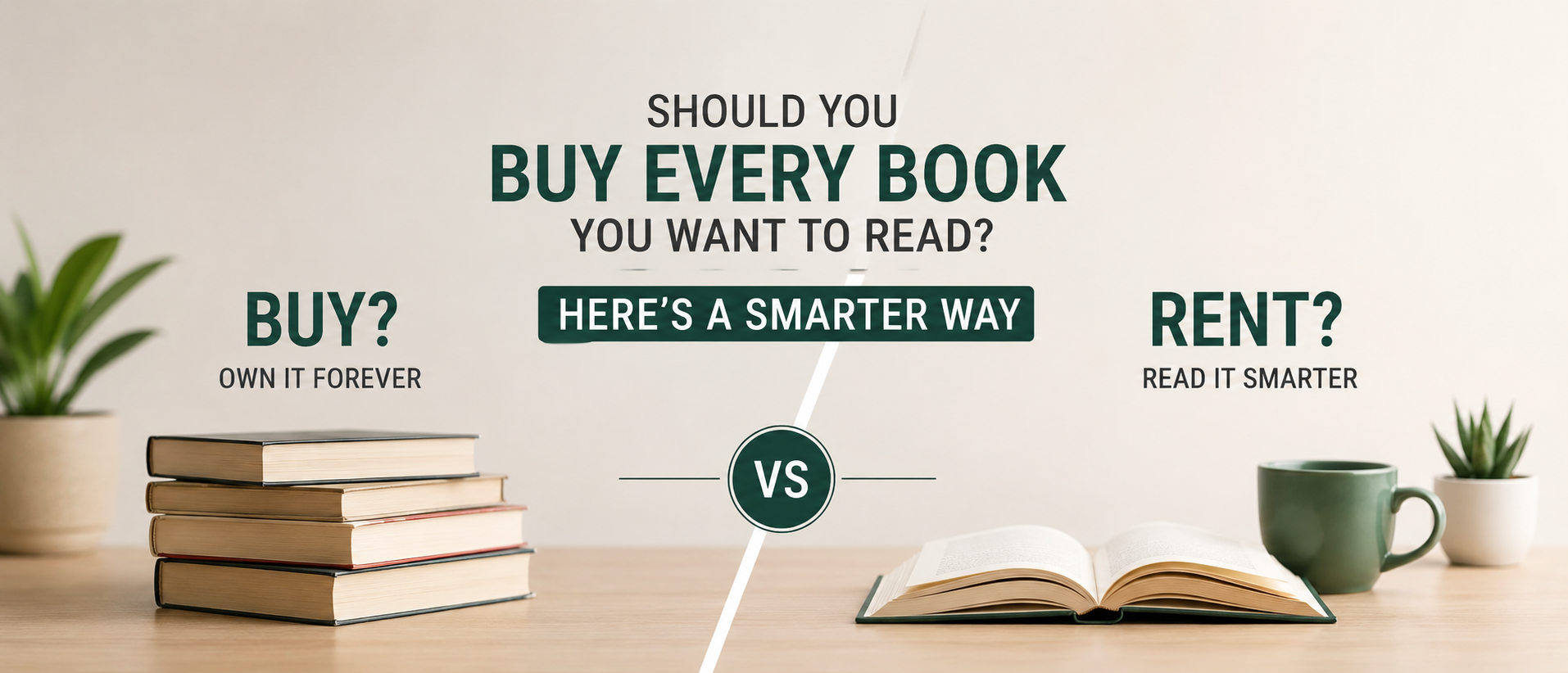
Should You Buy Every Book You Want to Read? Probably Not. Here’s a Smarter Way
Author: RentReadBuy Editorial Team
Published: 2026-07-10
Love reading but tired of spending money on books you may read only once? Learn when to buy, when to rent, and how RentReadBuy helps you read more without filling every shelf.
There is a familiar moment in every reader’s life.
You discover an interesting book through a friend, a social media recommendation, an online review or an AI assistant. The cover looks promising. The description sounds relevant. Within minutes, the book is sitting in your shopping cart.
Buying it feels like progress.
But a few weeks later, it may still be unopened.
Or perhaps you read it once, enjoyed it, placed it on a shelf and never picked it up again.
This does not mean buying books is a bad habit. A personal collection can hold memories, ideas and books worth revisiting for years. However, buying every book you feel curious about is not always the most practical way to become a better reader.
For many people, the smarter approach is simple:
Rent books you want to explore. Buy the books you genuinely want to keep.
That distinction can help you read more, spend more thoughtfully and build a personal library based on value rather than impulse.
Should You Buy or Rent Books?
The right choice depends on what you expect from the book.
You should generally buy a book when you expect to return to it repeatedly, annotate it extensively, use it as a long-term reference or give it a permanent place in your personal collection.
You should generally rent a book when you are exploring a new author, testing a recommendation, reading for a short-term goal or expecting to finish the book only once.
Neither option is universally better.
The smartest reading habit is learning to choose between them.
Why We Keep Buying Books We May Never Read
Book purchases are rarely driven by logic alone.
We buy books because they represent the person we hope to become.
A business book may represent ambition. A literary novel may represent curiosity. A parenting book may represent responsibility. A self-development title may represent the hope that life can improve.
That emotional connection is powerful, but it can also blur the difference between wanting to read a book and wanting to own it.
These are not always the same thing.
A book can be valuable even if it stays with you for only two weeks. You can finish it, absorb its ideas, return it and move to the next experience without needing to store it permanently.
Renting does not reduce the value of reading. It simply separates access from ownership.
India Does Not Have a Shortage of Books. It Has a Shortage of Reading Time.
Recent analysis of India’s Time Use Survey suggests that the proportion of people reporting leisure reading declined from 5.4% in 2019 to 4% in 2024. The issue appears to be less about a lack of interest and more about competing demands on people’s time.
Read the NCAER analysis on India’s changing reading habits
This matters because unused books do not create reading habits.
Access alone is not enough. A reader also needs:
- A manageable selection
- A reason to begin
- Enough time to finish
- A low-risk way to explore unfamiliar titles
- A simple path to the next book
An affordable rental model can reduce the pressure to make every reading choice feel like a permanent purchase.
“Is this book worth reading now?”
That is a much easier decision than asking whether every book deserves to be owned forever.
Five Situations Where Renting a Book Is the Smarter Choice
1. You Are Exploring a New Author or Genre
Recommendations can be persuasive, but taste is personal.
A book loved by thousands of readers may still not suit your interests, pace or expectations. Renting lets you experiment with fiction, biographies, business books, personal development, children’s books and other categories without committing to permanent ownership.
You get the experience of the book without the pressure of having to justify the purchase.
Explore the RentReadBuy Book Library
2. You Expect to Read the Book Only Once
Some books are journeys rather than references.
You may enjoy them deeply, remember them for years and still have no reason to read them a second time.
In such cases, ownership adds storage but not necessarily more value.
Renting allows the same copy to move from one reader to another while each reader receives the full benefit of the story or idea.
This follows a basic circular-economy principle: keeping products and materials in useful circulation for longer. Learn more through the Ellen MacArthur Foundation’s circular economy overview.
3. Your Reading Interests Change Frequently
One month you may want productivity books. The next month, you may prefer fiction, history, personal finance or travel writing.
When your interests are broad, buying every book can become expensive and cluttered.
Renting gives you the freedom to follow curiosity as it changes.
You are not forced to define yourself as one type of reader. You can simply choose what feels relevant now.
4. You Have Limited Shelf Space
A personal library looks beautiful until books begin occupying cupboards, desks, boxes and spaces intended for something else.
This is especially relevant for:
- Students living in hostels
- Professionals living in rented accommodation
- Families with limited storage
- Readers who relocate frequently
- Parents whose children quickly move between reading levels
A rental-first approach allows you to maintain access to a large variety of books without storing every title at home.
5. You Are Trying to Build a Consistent Reading Habit
People often assume buying more books will make them read more.
In practice, a large unread stack can create guilt rather than motivation.
A simpler system works better:
- Select one book.
- Read it.
- Return it.
- Choose the next one.
This creates a clear reading cycle with a beginning and an end.
RentReadBuy supports this model through online access to books, doorstep delivery, easy returns and flexible membership plans.
Five Situations Where Buying a Book Makes More Sense
Renting is practical, but some books deserve a permanent place in your life.
1. You Regularly Return to the Book
If you expect to revisit chapters, underline passages or use the book as a reference, owning it makes sense. These may include professional references, academic books, spiritual texts, cookbooks or books closely related to your work.
2. You Want to Annotate It Extensively
Some readers enjoy highlighting, writing notes in margins and building a personal conversation with the author.
A marked-up copy can become more valuable over time because it records what you noticed during different stages of life.
3. The Book Has Emotional Significance
A book received as a gift, discovered during an important period or shared with someone special may carry meaning beyond its content.
Such books are not merely reading material. They are personal objects. Keep them.
4. You Want to Share It Repeatedly
Some books circulate within families, teams and friendship groups for years. When a title becomes something you regularly recommend and lend, buying it can offer more value than renting.
5. It Belongs in Your Long-Term Collection
A thoughtful personal library is not measured by the number of books it contains.
It is measured by how many of those books still matter to you.
Buy the titles that reflect your enduring interests, values and experiences. Let the rest pass through your hands without needing to remain on your shelves forever.
A Simple Buy-or-Rent Decision Framework
Before placing your next order, ask these five questions:
Will I probably read this book more than once?
Yes: Consider buying.
No: Consider renting.
Do I need to write or highlight inside it?
Yes: Buy it.
No: Renting may be enough.
Am I already familiar with the author?
Yes: Buying may be a safer decision.
No: Rent first and explore.
Is the book relevant only to a current goal?
Yes: Renting may offer better value.
No: Consider its long-term usefulness.
Would I still want this book on my shelf three years from now?
Yes: Buy it.
Not sure: Rent it first.
This is not about choosing the cheapest option every time.
It is about matching the type of access to the type of value you expect.
The Hidden Cost of Buying Every Book
The price printed on the cover is only one part of the cost.
- The space required to store the book
- The mental clutter created by unread purchases
- The cost of relocating or maintaining a large collection
- The money unavailable for other books
- The pressure to finish a title you no longer enjoy
A book that costs more but is read repeatedly may offer excellent value.
A cheaper book that stays unopened may offer none.
How much reading value did you receive from what you spent?
Renting Can Help You Become a More Adventurous Reader
Ownership encourages caution.
When buying, readers often choose familiar authors, popular titles or safe recommendations because a wrong decision feels wasteful.
Renting reduces that risk.
You can try:
- An unfamiliar genre
- A new author
- A longer book
- A recommendation outside your usual interests
- A children’s title for a changing reading level
- A book linked to a temporary learning goal
Some choices will work. Others will not.
A healthy reading life should include experimentation, not only successful purchases.
Renting and Buying Should Work Together
The most useful reading model is not “rent instead of buy.”
Rent before you decide what deserves to be bought.
You may rent a book, enjoy it and return it.
Or you may discover that it is valuable enough to own, annotate and revisit.
RentReadBuy is designed around that flexibility. Readers can explore books online and choose an access model that suits their needs rather than being forced into ownership for every title.
That makes renting and buying complementary rather than competitive.
How RentReadBuy Makes Reading More Accessible
RentReadBuy helps readers access books through a model built around affordability, flexibility and convenience.
Readers can:
- Browse books online
- Rent books instead of purchasing every title
- Explore fiction, children’s books, self-help and other categories
- Receive books through doorstep delivery
- Use an easy return process
- Choose flexible membership plans
- Buy selected books when ownership makes more sense
A Smarter Reading Strategy for Different Readers
For Students
Rent books connected to short-term courses, competitive preparation, projects or changing interests. Buy the foundational references you expect to use repeatedly.
For Working Professionals
Rent books related to current skills, leadership challenges or temporary career goals. Buy the books that become lasting professional references.
For Parents
Rent books as children move between reading levels and interests. Buy the favourites they request repeatedly or want to keep.
For Fiction Readers
Rent books you expect to enjoy once. Buy the novels you love enough to reread, collect or share.
For New Readers
Renting reduces the cost of discovering what you actually enjoy. You can try several genres before investing in a permanent collection.
For Committed Book Collectors
Continue building your library, but use renting as a discovery layer. It can help you decide which books genuinely deserve shelf space.
Frequently Asked Questions
Is renting books worth it?
Renting books can be worthwhile when you read frequently, explore different genres, have limited storage or rarely reread books. Buying may offer better value for books you annotate, revisit or want to preserve.
Is it better to buy or rent books?
Neither is always better. Rent books you want to explore or read once. Buy books you expect to use repeatedly, annotate or keep for emotional or long-term value.
Can I rent books online in India?
Yes. RentReadBuy allows readers to browse and rent books online with delivery and return support. Visit the online book library to explore available titles.
Does renting books help save money?
It can reduce the need to purchase every title at full ownership cost, particularly for books read only once. The actual saving depends on your reading frequency, chosen plan and whether you normally reread purchased books.
Is book renting environmentally friendly?
A rental model can support reuse by allowing the same physical book to serve multiple readers. This is consistent with circular-economy principles that encourage products to remain useful for longer.
Should I rent a book before buying it?
Renting first can be practical when you are unsure about an author, genre or recommendation. After reading it, you can decide whether the book offers enough long-term value to purchase.
What types of books are suitable for renting?
Fiction, biographies, self-development books, children’s books, temporary study materials and books connected to short-term interests are often suitable for renting.
Final Thought: Build a Reading Life, Not Just a Bookshelf
A full bookshelf can be beautiful.
But the real goal is not to own the maximum number of books.
It is to read widely, think deeply and keep the books that continue to matter.
Buy the books you want to live with.
Rent the books you want to experience.
Return what has completed its purpose.
Then move confidently to your next read.
With RentReadBuy, you do not have to choose between being a serious reader and being a practical consumer. You can rent, read, return—and buy the books that truly earn their place in your life.
Explore Available Books View Membership Plans