Best Books on Indian Freedom Fighters: Inspiring Reads for Independence Day and Beyond
Author: RentReadBuy Editorial Team
Published: 2026-08-11
Discover inspiring books on Indian freedom fighters, from biographies and autobiographies to powerful first-hand writings and histories of India's freedom struggle.
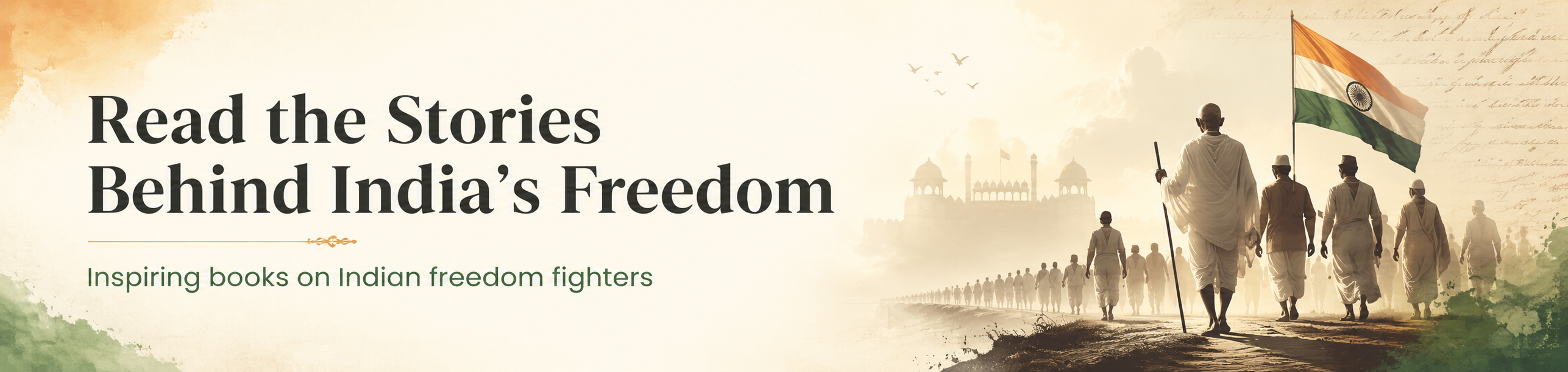
Some stories of India’s freedom struggle are first encountered in classrooms, speeches or Independence Day programmes. But books can take readers much further. They can introduce the people behind the familiar names, the ideas they wrestled with, the choices they made and the very different paths through which Indians challenged colonial rule.
If you are looking for the best books on Indian freedom fighters, there is no single title that will suit every reader. A biography may be the best starting point for someone discovering a historical figure for the first time. An autobiography can offer a more personal perspective, while original writings allow readers to encounter a freedom fighter’s ideas in their own words.
This guide brings together a practical starting selection of freedom fighter books and related reading currently relevant to RentReadBuy readers. The aim is not to rank one leader above another, but to help you choose the kind of book that best matches what you want to understand.
Quick answer: Start with a biography if you want an accessible introduction to a freedom fighter’s life. Choose an autobiography for a personal account, original writings for deeper insight into ideas and beliefs, and broader histories when you want to understand the events and movements surrounding individual leaders.
Which Kind of Freedom Fighter Book Should You Read?
Before choosing a title, it helps to decide what kind of reading experience you want.
| Type of book | Best for | What it offers |
|---|---|---|
| Biography | Beginners and students | A structured account of a person’s life, actions and historical setting. |
| Autobiography | Readers who want a personal perspective | The author’s own account of experiences, beliefs and development. |
| Original writings | Older students and deeper readers | Direct exposure to the writer’s arguments, questions and worldview. |
| Movement history | Readers wanting wider context | A broader understanding of events, movements and historical consequences. |
Best Books on Indian Freedom Fighters to Start With
The following books approach India’s freedom struggle in different ways. Together, they make a useful starting point for readers who want more than a list of names and dates.
1. Amar Shaheed Bhagat Singh — Mahesh Sharma
For readers beginning with Bhagat Singh, a biography can provide the clearest route into his life and the historical circumstances around him. Amar Shaheed Bhagat Singh introduces the revolutionary through a narrative centred on his life, political activity and sacrifice.
Why read it?
A biography helps connect the familiar image of Bhagat Singh with the events and decisions that shaped his role in India’s anti-colonial movement. It is a more approachable place to begin than jumping directly into political essays or primary writings.
Best for: Readers looking for an introductory biography, students beginning to explore Bhagat Singh, and anyone who wants background before reading his own writings.
Explore Amar Shaheed Bhagat Singh
2. The Story of My Experiments with Truth — Mahatma Gandhi
A biography tells us how another writer interprets a historical figure. An autobiography gives us something different: the individual’s own account of how experiences shaped their values and decisions.
In The Story of My Experiments with Truth, Gandhi reflects on his personal development, his pursuit of truth and the experiences that influenced the ideas for which he later became known.
Why read it?
It allows readers to look beyond a textbook summary of Gandhi and encounter the way he explained his own moral and intellectual journey. That makes it particularly valuable for readers interested in the relationship between personal beliefs and public action.
Best for: Older students, adult readers and anyone who wants a first-person account rather than a conventional biography.
Explore The Story of My Experiments with Truth
3. Why I Am An Atheist and Other Works — Bhagat Singh
Reading about a freedom fighter and reading what that person actually wrote are very different experiences.
Why I Am An Atheist and Other Works brings readers closer to Bhagat Singh as a thinker and writer. Instead of presenting only the major events of his life, the collection provides an opportunity to engage with his arguments, questions and intellectual concerns directly.
Why read it?
It adds depth after a biography. Readers can move from asking “What happened in Bhagat Singh’s life?” to asking “How did he think about society, belief, politics and responsibility?”
Best for: Older students and adults who are comfortable with reflective and political writing. It is not the same kind of beginner-friendly reading experience as a straightforward biography.
Explore Why I Am An Atheist and Other Works
Go Beyond Individual Leaders: Read the Events Around Them
A useful reading list on Indian freedom fighters should not make the freedom struggle look like the work of only a handful of famous individuals. Historical events, public movements and the experiences of ordinary people also shaped the course of the independence movement.
For readers who want this broader context, a work such as Jallianwala Bagh by Kim A. Wagner can help explore one of the most consequential episodes of the colonial period and its wider historical significance.
Students looking for a structured academic overview can also explore history texts covering Gandhi, nationalism, Partition and the later stages of the freedom movement. These books serve a different purpose from biographies: they help connect individual lives to larger political and social developments.
What About Freedom Fighter Books for Kids?
Parents often search for freedom fighter books for kids, but age suitability matters more than simply putting “for children” on a reading list.
For a younger reader, begin with a book that has an accessible narrative, manageable language and enough context to explain why the person or event matters. A dense collection of political writings may be valuable, but it may not be the right first introduction for a child who has only recently become curious about Indian history.
A useful progression can be:
- Start with the story: choose an accessible biography or illustrated account.
- Add the historical context: explain the period, event or movement surrounding the person.
- Move to original writings later: older readers can then encounter speeches, letters, essays or autobiographical writing.
- Let interest guide the next book: a child curious about Bhagat Singh may next want to understand Jallianwala Bagh, Gandhi or the wider independence movement.
If you are choosing for a child, our practical guide to choosing the right books for kids by age can help you judge reading level, maturity and format before ordering.
If the book is interesting but slightly above the child’s independent reading level, consider sharing it together. Our guide to the benefits of reading aloud to children explains how older children can also explore biographies, nonfiction and unfamiliar subjects with adult support.
How to Choose Between a Biography, Autobiography and Original Writings
If several titles interest you, use the reader’s question to make the choice.
- “Who was this person?” — start with a biography.
- “How did this person understand their own life?” — choose an autobiography.
- “What did this person actually think and argue?” — read original writings.
- “What was happening in India around them?” — choose a wider historical study.
This approach is more useful than trying to find one universal “best” book. Different formats answer different questions.
Why Independence Day Is a Good Time to Begin—But Not the Only Time
Independence Day naturally brings Indian history back into family conversations, classrooms and public life. That makes August a good moment to encourage readers to move beyond short summaries and discover the longer stories behind the names they already recognise.
But these books should not become once-a-year reading.
A thoughtful biography, autobiography or work of history can help readers return to questions about courage, disagreement, social change, political ideas and the many different ways people participated in India’s freedom struggle. Those questions remain worth exploring long after 15 August has passed.
For families trying to make books part of everyday life rather than only special occasions, our practical 30-day guide to developing reading habits in children offers a simple routine for building consistency.
Should You Rent or Buy a Freedom Fighter Book?
You do not necessarily have to purchase every history or biography title you want to explore.
Renting can make sense when:
- you are exploring a freedom fighter or historical topic for the first time;
- a student needs the book for a particular period, project or reading phase;
- you want to compare several kinds of history books before deciding what deserves a permanent place on your shelf;
- you enjoy moving regularly from one author, leader or historical period to another.
Buying can make more sense when:
- you know you will return to the book repeatedly;
- you want to annotate or make notes in your own copy;
- the title has personal or collectible value for you;
- you want to build a permanent Indian-history bookshelf at home.
RentReadBuy supports both reading journeys. You can explore books for rent online , browse the wider RentReadBuy book catalogue , or see how RentReadBuy works before choosing.
Start With the Story That Makes You Want to Know More
The best reading journey through India’s freedom struggle does not have to begin with the thickest history book or the longest list of famous names.
It can begin with one person.
A reader may start with a biography of Bhagat Singh, move to his own writings, become curious about the political environment around him, and then discover other leaders, movements and events. Another reader may begin with Gandhi’s autobiography and move outward from his personal experiences to the much wider story of Indian nationalism.
That curiosity is the real value of a good history book: it gives you an answer, but it also leaves you with a better question for the next book.
Ready to explore the stories behind India’s freedom?
Browse relevant books on RentReadBuy and choose whether you want to rent your next read or add it permanently to your bookshelf.
Browse books on RentReadBuyHistorical sources and further reading
Readers who want to move beyond secondary summaries can also explore institutional collections and primary-source material.
Editorial note: Book availability, editions, rental pricing and purchase pricing may change. Please check the individual RentReadBuy product page for the latest details before ordering.